A Godot rhythm base-defense game where Shoot, Block and Reload resolve on a shared beat, and songs drive the enemy charts.
At a glance
Outcome: A rhythm game where you defend a base to a shared beat. Shoot, Block and Reload land on the beat, and how close you hit it sets their strength. A KnownBetter Studios game.
Status: In development and playable: a four-encounter first chapter with saved progress, eight songs playable as trials, SaBRLab drills and a local two-player duel scene. Device feel, LAN play and release are unverified.
Role: Solo: set the product direction and combat rules; reviewed AI-assisted implementation.
Stack & libraries: Godot 4.6.2, GDScript, a Nix flake pinning the toolchain, ffmpeg and oggenc for song intake.
Validation: Headless checks run the real game on a controlled clock and test actions, defense, song audio, desktop input and boot; CI runs them on every push. A manual run of Peaches on October 7, 2026, the clip above, showed reflection, Reload, movement and Pulse placement.
Source: Private, under KnownBetter Studios’ proprietary license.
Limitations: Listening reviews of the song levels, device feel, LAN play and release checks remain open. Each song’s first beat is estimated until its listening review.
SaBR is a rhythm game where you defend a base. Enemies enter from the edges of the arena in time with the song. You have three actions, Shoot, Block and Reload, and each one lands on the beat. You can move at any time.
You carry three bullets and can spend the whole clip at once on an Overload. Each action is graded Early, Good or Perfect by how close it lands to the beat. A better grade makes it stronger: a Block shield lasts one, two or four beats.
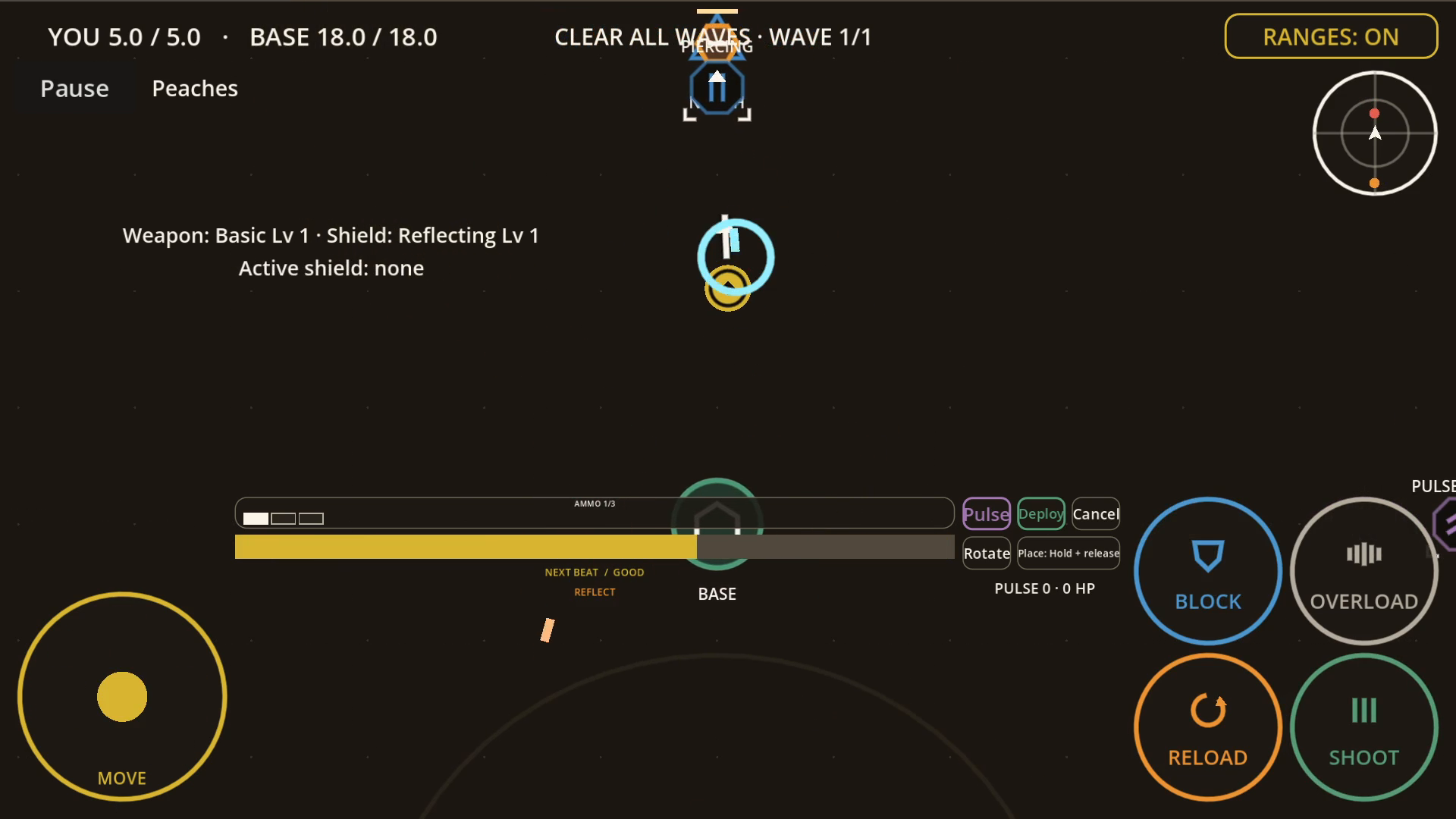
In the clip above, played by hand on the song Peaches, a Good Block at 4.9 seconds reflects an incoming shot. The player stays at 5 of 5 health, and the shield is used up.
At 4.9 seconds in the clip, the reflected shot leaves the player at full health and consumes the shield charge.
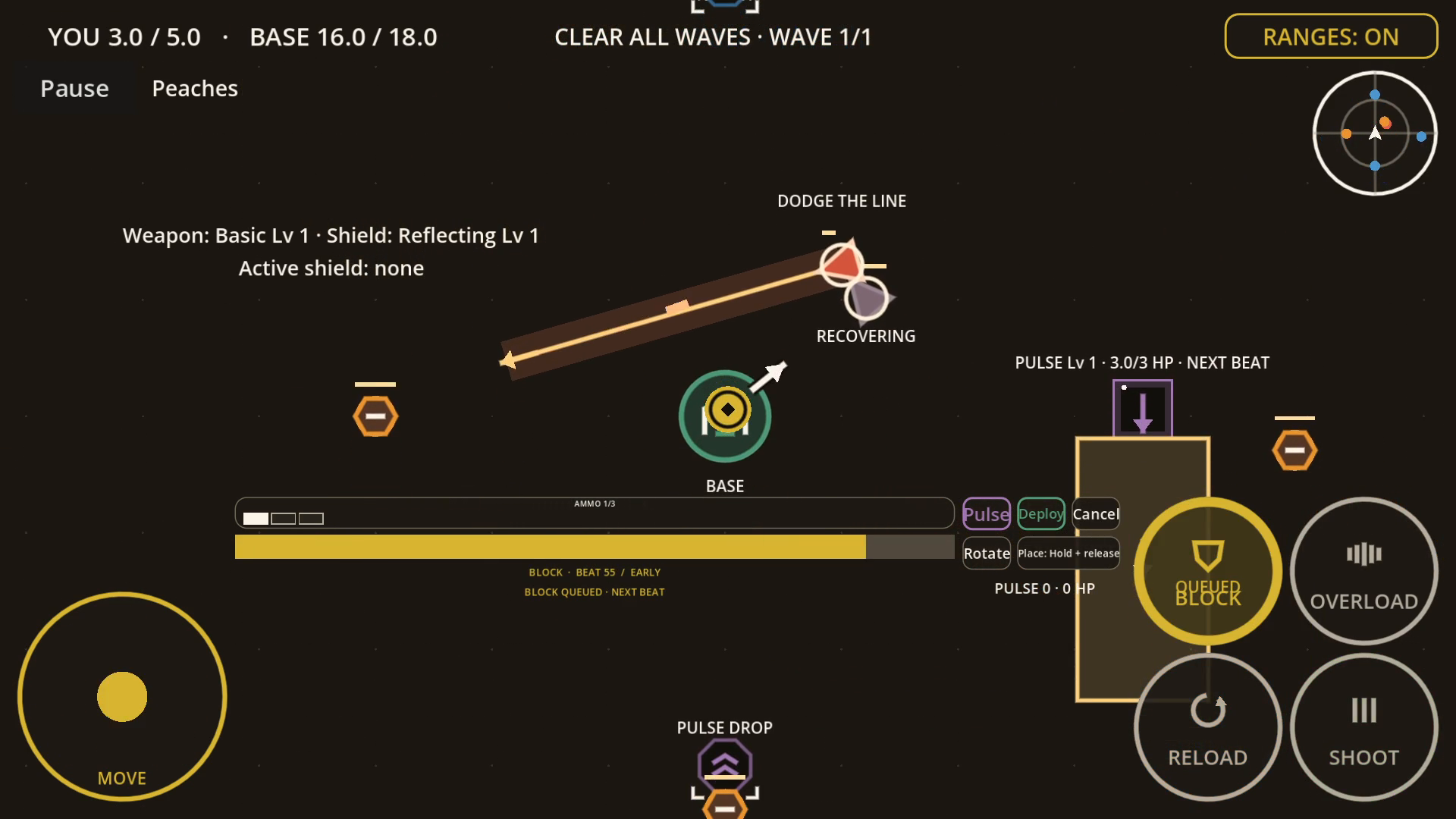
Beaten enemies drop weapons, shields and assemblies, and matching pickups level each other up. Every run starts with the same gear and can end with a different build. Chargers lock onto a line of attack and give one full beat of warning before they charge.
Assemblies are obstacles you place at any time, even off the beat. The game has barriers and Pulse machines, which push enemies back in time with the music.
At 28.2 seconds, Charger pressure and a placed Pulse share the arena. Damage and ordinary mistakes remain in the manual take.
The songs are my own mixes, and one command turns a mix into a playable level. It estimates where the first beat falls and marks sections by how intense the music is. It sends enemies every 8, 4 or 2 beats as the intensity rises and keeps the last four beats clear. Peaches, at 83 beats per minute, has a hand-built level instead.
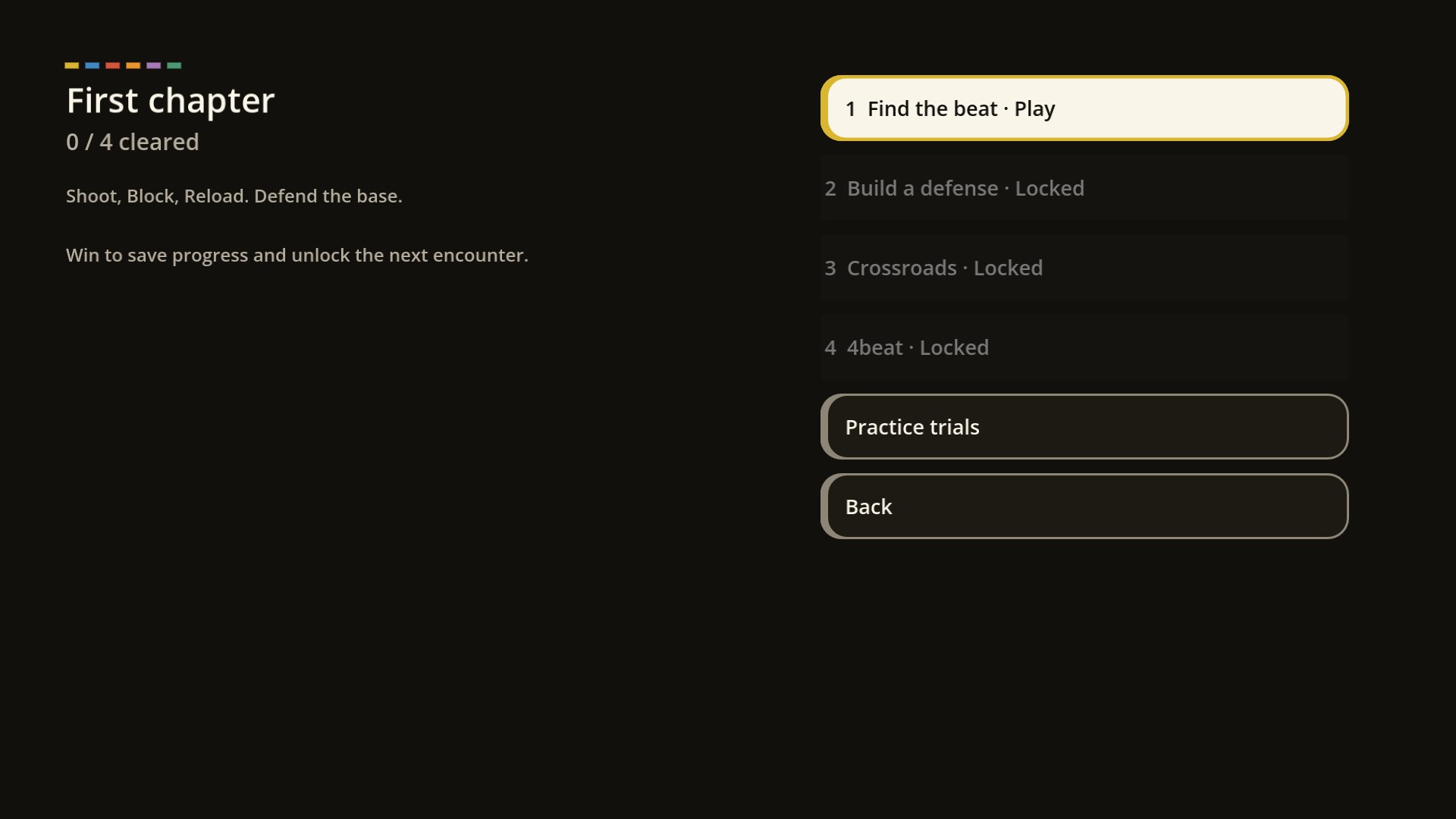
The game opens to a four-encounter first chapter with saved progress, ending on a level built on the song 4beat open verse. A Songs menu plays all eight songs, SaBRLab has one drill per mechanic, and a two-player duel runs as its own scene.
The first chapter unlocks its four encounters in order.
Next come listening reviews of the song levels and a play review of the duel, then the first network duel with contested pickups. The design later adds a co-op campaign, endless survival, free-for-alls, team battles and play stats in SaBRLab.
Song levels arrived: every song in the catalog plays with a generated level, and Peaches has a hand-built one at 83 BPM.
MANUAL GAMEPLAY · OCTOBER 7, 2026
An uninterrupted 30-second run at normal speed, with the owner's Peaches track and live game audio. Range guides remain visible; auto-aim appears enabled. Unmute for sound and use fullscreen for timing labels. This excerpt does not show a win.